Baby Island: Filling the Gap in India’s Growing Kidswear Market
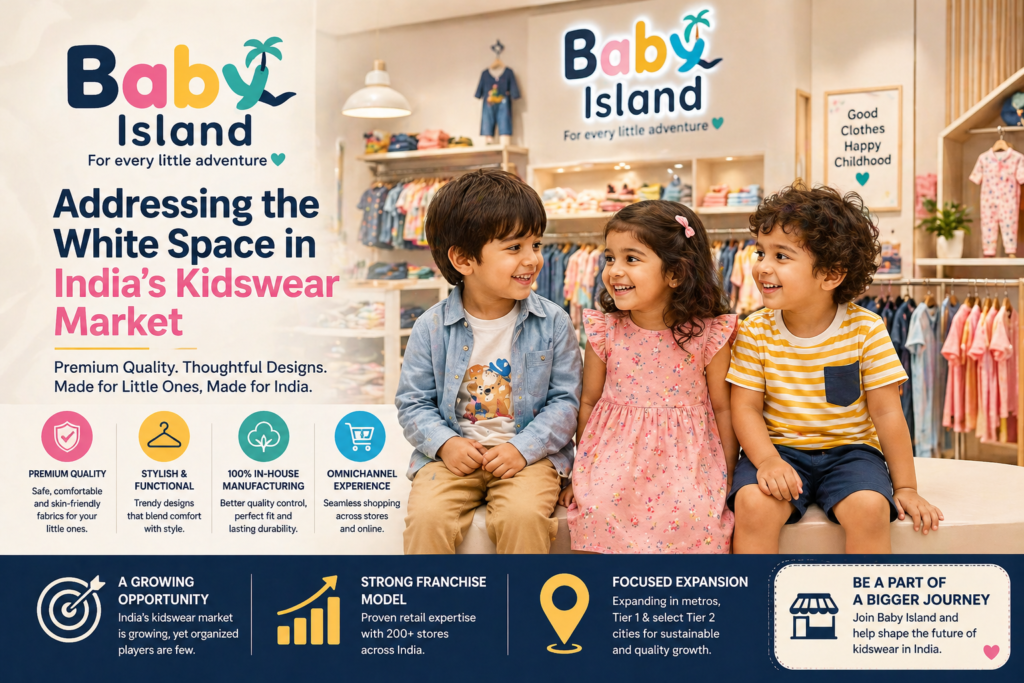
India’s fashion industry has expanded rapidly over the last decade, but one category still remains surprisingly underserved—kidswear.
While adults have endless choices in fashion, parents looking for premium-quality clothing for babies and children often struggle to find trusted, organized brands. This gap in the market has created a strong opportunity for brands like Baby Island.
As highlighted in the original feature about Baby Island’s growth strategy , the brand is focused on solving this long-standing problem by offering high-quality, stylish, and reliable kidswear for modern Indian families.
Backed by the retail expertise of Roman Island, Baby Island is building a strong presence in India’s organized kidswear segment through a quality-first and franchise-led approach.
Why India’s Kidswear Market Has Huge Potential
India has one of the world’s youngest populations, and urban families today are spending more on premium products for children than ever before.
Parents are becoming more conscious about:
- Fabric quality
- Comfort and safety
- Stylish yet functional designs
- Trusted branded shopping experiences
Despite this demand, the organized kidswear market still has limited strong players compared to menswear and womenswear.
Many parents still depend on international shopping or ask relatives travelling from countries like the US and Canada to bring quality baby clothing.
This clearly shows a major gap in India’s domestic retail market.
The Challenge with Kidswear Manufacturing
Kidswear may look simple, but it is actually one of the most complex segments in fashion retail.
Unlike adult clothing, children’s apparel requires:
- Strict safety standards
- Skin-friendly premium fabrics
- Comfortable fitting
- Better durability
- Accurate sizing
- Child-safe accessories and stitching
These quality expectations make production more difficult and expensive, which is why many brands avoid entering the segment.
Baby Island sees this challenge as its biggest opportunity.
Baby Island’s Quality-First Business Model
Instead of functioning like a marketplace that sources from multiple vendors, Baby Island follows a 100% in-house manufacturing model, as described in the source article .
This gives the brand better control over:
- Product quality
- Design consistency
- Fabric selection
- Size accuracy
- Long-term durability
This approach helps create stronger customer trust—something extremely important for parents buying for infants and young children.
The brand positions itself in the mid-premium and aspirational segment, targeting urban families who prioritize both quality and style.
The Roman Island Connection
Baby Island’s foundation comes from the successful journey of its parent company, Roman Island.
Founded in 2011 by Charan Reddy and Arutla Karan Reddy under the KRD Group, Roman Island built strong experience in menswear, retail operations, and franchise expansion.
With over 200 stores across India, Roman Island developed a scalable franchise model and strong operational systems.
These learnings became the foundation for launching Baby Island.
The brand recognized that if organized franchising could transform menswear, it could do the same for kidswear.
Franchise-Led Expansion Strategy
One of Baby Island’s biggest strengths is its smart expansion strategy.
Instead of rushing into every market, the brand is focusing on:
- Metro cities
- Tier 1 cities
- Select Tier 2 markets
The company is intentionally avoiding Tier 3 towns and smaller markets in the early stages to protect brand positioning and maintain customer experience.
This selective growth strategy helps preserve premium brand value while ensuring sustainable expansion.
Omnichannel Growth for the Future
Baby Island is not relying only on offline stores.
Its long-term growth strategy is built around an omnichannel model that combines:
- Exclusive retail stores
- Direct-to-consumer online sales
- Strong digital customer engagement
- Better online-offline shopping convenience
This hybrid approach reflects modern customer behavior, where parents often research online before making store purchases.
Building both digital and physical retail strength creates stronger long-term scalability.
Why Franchise Partners See Opportunity
For franchise investors, Baby Island offers a strong opportunity because it combines:
- An underserved market
- Proven retail expertise
- Controlled manufacturing
- Premium brand positioning
- Sustainable expansion planning
Unlike overcrowded fashion categories, kidswear still has major white space for organized growth.
This gives franchise partners better long-term business potential.
The Long-Term Vision
Baby Island aims to become a leading kidswear brand in South India over the next five to six years, with plans for national brand recognition in the following decade .
Its focus remains clear:
Build trust first, scale second.
By solving real customer problems and maintaining strict quality standards, the brand is creating a stronger foundation for future growth.
Final Thoughts
India’s kidswear market is ready for transformation.
Parents want better choices, stronger quality, and more reliable shopping experiences for their children. Baby Island is stepping into this space with the right timing, the right strategy, and the right retail expertise.
By combining franchise strength, in-house manufacturing, and premium customer focus, the brand is not just selling children’s clothing—it is building long-term trust in one of India’s most promising fashion segments.
For the organized kidswear industry, Baby Island may be one of the most important emerging brands to watch.